
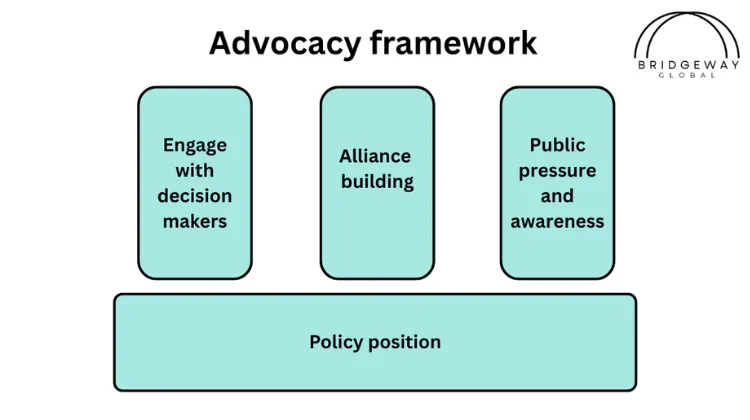
Advocacy without a framework is like a house without foundations – likely to fall apart!
I've seen organisations with the best intentions unable to gain real momentum or garner any meaningful support, simply because they haven't got a clear plan.
To reach your goals having strong pillars can make all the difference.
These are my 4 key pillars to advocate effectively:
1. Engage with key decision makers
- Creates an opportunity for meaningful two-way dialogue
- It's a way to have your issues heard and to shape change
2. Alliance building
- Strength in numbers! It demonstrates that the issue is important to a broad cross section of stakeholders
- You're more likely to move the needle when working collaboratively. You may also be able to pool resources such as funding, staff time and expertise
3. Public pressure and awareness
- Public awareness campaigns can change what's considered politically possible or acceptable
- When public awareness is high and communities care about an issue it can be hard for decision makers to ignore
4. Evidence and data driven policy
And last but definitely not least, I would describe this one as the foundation pillar.
- This will help position you as a credible expert
- Helps refine and strengthen your arguments
- Decision makers are more likely to be receptive to your recommendations
In an ideal world, organisations would put resources and focus into all of these four pillars. However, I do recognise this isn't always possible, especially in smaller organisations.
Here at Bridgeway Global we specialise in advocacy and policy, particularly for not-for-profit organisations such as peak bodies and associations.
Please reach out to me if you'd like some more information or a chat!